

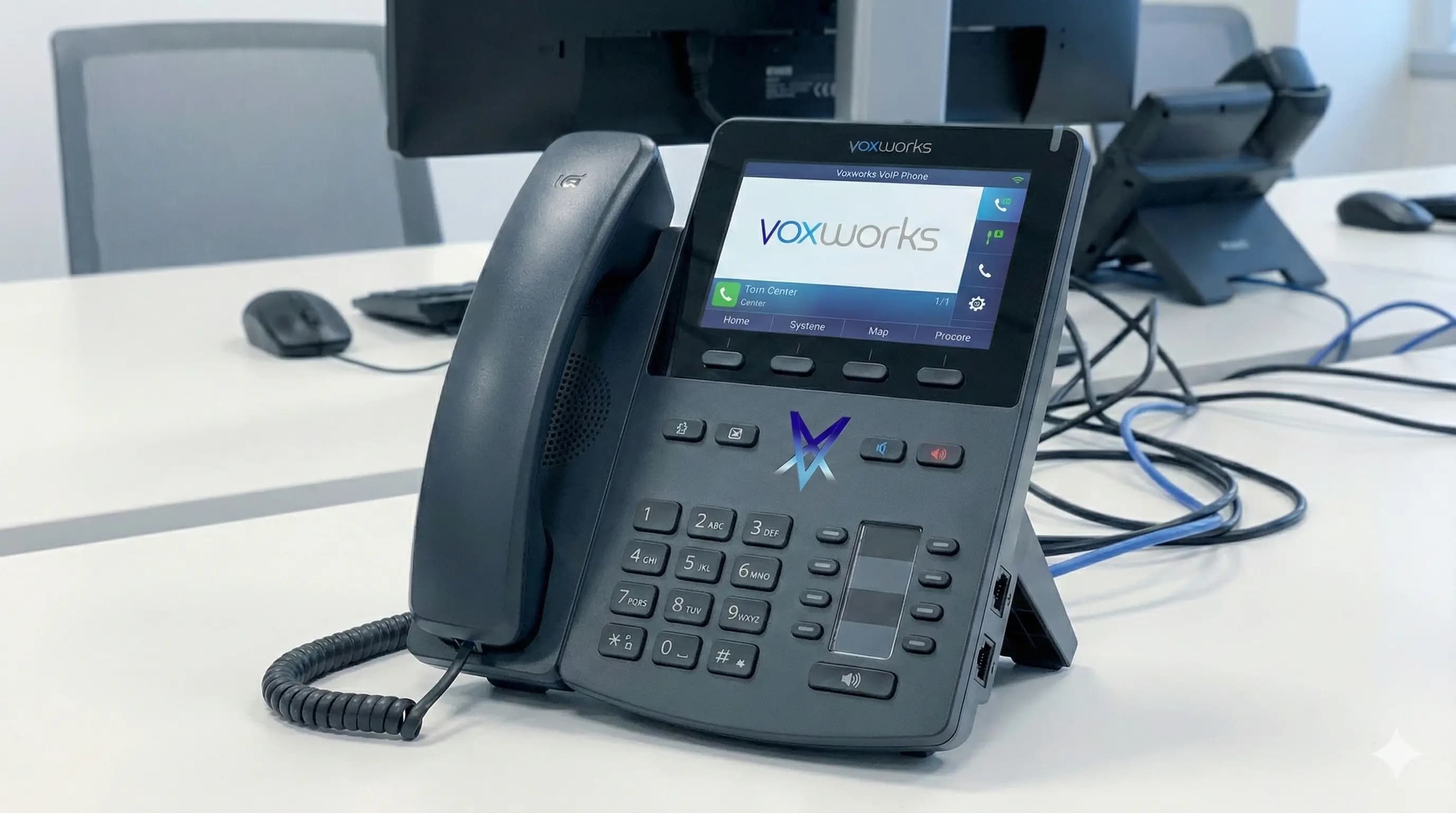
SIP trunking is how AI voice systems connect to the actual phone network. It replaces traditional phone lines with internet-based connections, letting your AI call center handle calls over the web instead of through physical hardware. Without it, your AI can't talk to customers.
How Calls Actually Reach Your AI
Ever wonder what happens between someone dialling your number and your AI answering? Here's the chain:
- Caller dials (mobile or landline)
- Call routes through carrier (Telstra, Optus, etc.)
- Carrier connects to SIP provider (internet handoff)
- SIP provider routes to AI platform (over internet)
- AI answers and handles the call
That "SIP trunk" is the bridge. It's where traditional telephony meets internet-based AI. Break this link, and nothing works.
Why SIP Matters for AI Call Centers
Scalability Without Hardware
Traditional phone lines are physical. Want more capacity? Install more hardware. Wait for technicians. Pay setup fees.
SIP trunks are virtual. Adding capacity is software configuration. Your AI call center can handle 1 call or 1,000 with the same infrastructure.
Lower Costs at Scale
Traditional setup:
- Per-line monthly charges
- Per-minute call charges
- Physical infrastructure costs
SIP setup:
- Lower per-minute rates
- No physical infrastructure
- Pay for what you use
For AI call center solutions handling volume, the savings add up fast. Why Is AI Voice So Hard?
Route Calls Anywhere
Traditional phone lines are fixed to physical locations. SIP routes anywhere with internet.
Your AI can distribute calls across multiple servers, multiple regions. Load balancing, failover, geographic optimisation. All possible because SIP doesn't care where the server sits.
Better Audio = Smarter AI
Traditional circuits have limited audio quality. SIP supports high-definition audio codecs.
Why does this matter? Better audio means better transcription. Better transcription means better AI responses. Your AI call center is only as good as what it can hear. What Is Latency in AI Voice Calls?
The Key Components
SIP Provider
The company providing your phone number and connectivity.
- Examples: Twilio, Symbio, Vocus, Telstra
- Handles inbound and outbound calling
- Assigns phone numbers to your system
SIP Trunk
The connection itself. Think of it as a virtual "pipe" for calls.
- Configured with provider credentials
- Determines how many calls you can handle at once
- Can be redundant for reliability
Codec
How audio gets encoded for transmission.
- G.711: Standard quality, higher bandwidth
- Opus: High quality, efficient compression
- G.729: Compressed, lower bandwidth
The codec you choose affects call quality and bandwidth usage. For AI call center applications, prioritise quality over compression.
PSTN Gateway
Where SIP meets the traditional phone network. Converts between digital and circuit-switched calling. Usually managed by your provider. You don't need to think about it.
Inbound vs. Outbound: Different Paths
Inbound Calls
Customer calls your business number. Call arrives via SIP trunk. AI answers.
Setup: Point your phone number to your AI system's SIP endpoint.
Outbound Calls
AI initiates the call. Call routes out via SIP trunk. Carrier delivers to the recipient.
Setup: Authenticate your AI system with SIP provider credentials. Speed to Lead: Why AI Calling Leads to 10x Improvement
What Affects Call Quality
Jitter
Variation in packet arrival timing.
- High jitter = choppy, broken audio
- Solution: Jitter buffers add slight delay for smoothness
Packet Loss
Audio packets that don't arrive at all.
- High packet loss = missing chunks of conversation
- Solution: Quality provider and solid network infrastructure
Latency
Time for audio to travel.
- High latency = delayed, awkward conversation
- Solution: Geographic proximity and quality routing
Latency Down Under: Why Local Hosting Matters for AI Voice
Codec Selection
The trade-off between quality and bandwidth.
- Higher quality codecs need more bandwidth
- Compressed codecs work on limited connections
- For AI call centers, lean toward quality
Australian-Specific Considerations
Local Numbers Matter
Australian customers prefer calling Australian numbers. 02, 03, 04xx, 1300—these signal legitimacy.
SIP lets you provision local numbers regardless of where your servers sit. Your AI call center can have a Sydney number while processing calls from anywhere.
Data Sovereignty
Call audio travels through SIP infrastructure. Where does your provider process and store that data?
For Australian businesses with compliance requirements, this matters. Some industries require Australian data handling.
Carrier Relationships
Australian telcos have specific SIP interconnection arrangements. Some providers have better Australian connectivity than others.
Poor routing can mean calls bouncing internationally before returning—adding latency and potential compliance headaches. Data Sovereignty: Why AI Voice Needs Australian Servers
Keep Calls Local
Calls between Australian numbers should stay in Australia. International routing adds latency and may create compliance issues you didn't expect.
How Voxworks Handles This
We manage the SIP complexity so you don't have to.
What you see:
- Assign a phone number to your AI agent
- Calls just work
What happens behind the scenes:
- SIP trunks provisioned automatically
- Australian numbers allocated
- Carrier interconnections managed
- Audio routing optimised for quality
- Quality monitoring and alerts
- Automatic failover handling
The result:
- Australian numbers available
- Australian-optimised routing
- High-quality audio for best AI performance
- Scalability built in from day one
Quick Reference: SIP Terminology
PBX: Private Branch Exchange (your phone system) IVR: Interactive Voice Response (phone menus) DID: Direct Inward Dialing (individual phone numbers) ATA: Analog Telephone Adapter (connects regular phones to SIP) Softphone: Software that makes SIP calls RTP: Real-time Transport Protocol (carries actual audio)
Voxworks handles SIP infrastructure so you can focus on your AI call center. Learn more at voxworks.ai.